
Spray drying technology has a centuries-old history. This method uses an atomizer to disperse liquid raw materials into fine mist droplets. When these droplets contact hot air, their water rapidly vaporizes, yielding powdery or granular products.
Evolution and Applications
Spray drying first emerged in 1865 for egg processing. Since then, this process—turning liquids into solid powders via atomization and rapid drying—has advanced significantly. Today, it’s widely used in food, chemical, and pharmaceutical industries to produce products like milk powder, soybean powder, coffee, and medications.
The Challenge of High-Pressure Atomization
A critical step in spray drying is atomization, which relies on liquid supply pressure. Nozzles may require up to several hundred kg of pressure, depending on factors like liquid density, viscosity, solid content, and wear resistance. Standard hoses can’t withstand such pressures, while hydraulic hoses—though suitable for industrial use—aren’t food-grade, ruling them out for food production.
Orientflex’s Teflon Hose Solution
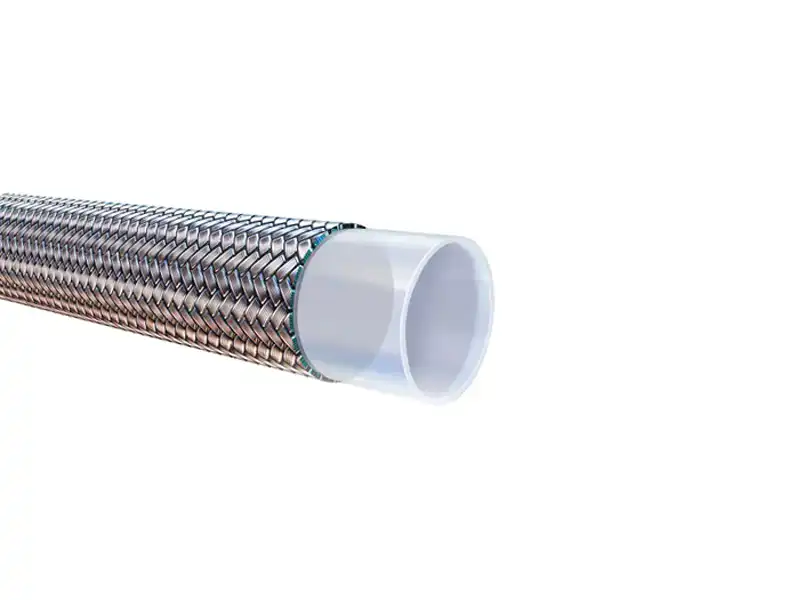
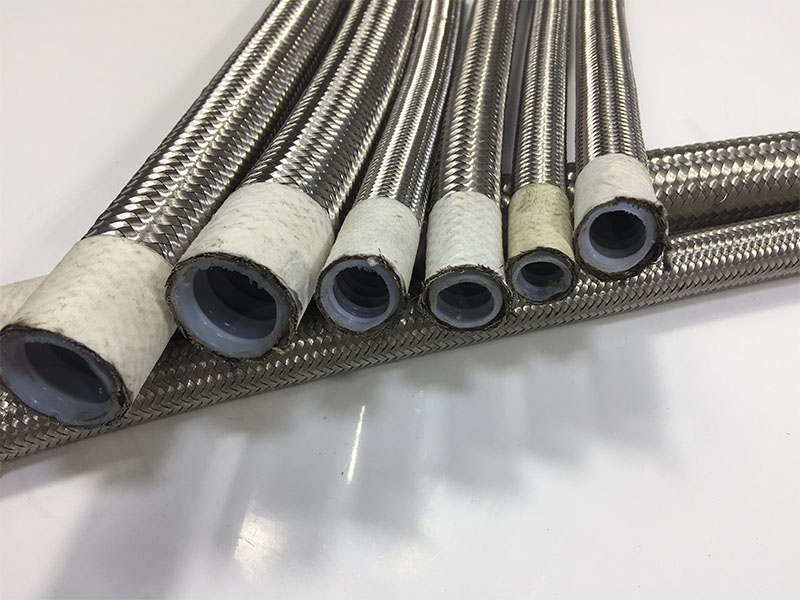
Orientflex offers a specialized solution: Teflon hoses. Made from high-quality PTFE, these hoses feature a steel wire braid cover to resist cuts and impacts. We also provide protective sleeves like spiral guards and silicone sleeves for added durability.
Key Advantages of PTFE Lined Hoses:
Temperature Range: Operates reliably from -70°C to 260°C.
High Pressure Rating: Withstands up to 35 MPa, ideal for high-demand atomization.
Food-Grade Safety: Compliant with food industry standards, ensuring hygiene for edible products.
Durability: Resists UV damage, aging, and chemical corrosion.
Beyond our R14 hose model, we offer a full range of compatible fittings. Contact us today to explore how our Teflon hoses can optimize your spray drying processes.