
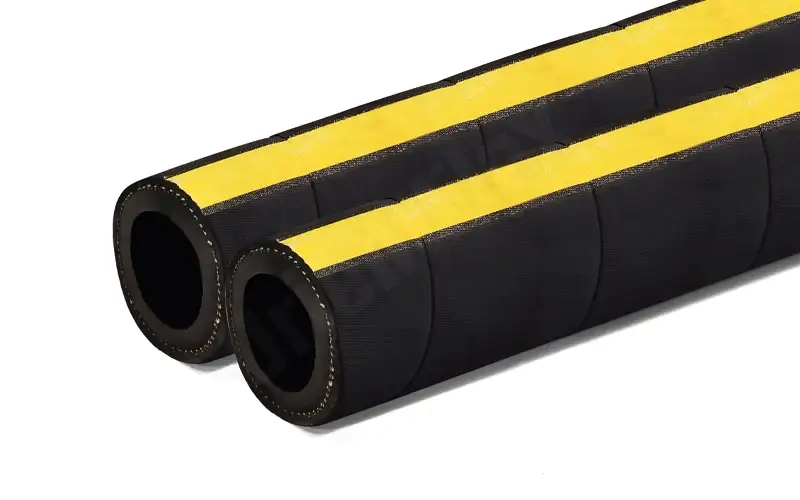
While wear-resistant sand blaster hoses might sound unfamiliar, they’re straightforward tools designed for heavy-duty use. As their name implies, these hoses are built to resist abrasion. Let’s explore their features, why standards matter, and the technical specs that define them.
What Makes Sand Blaster Hoses Wear-Resistant?
Durable Materials:
The inner layer is made of PU (polyurethane) or butyl rubber, both known for resisting wear and high pressure.
Special reinforcing agents, like braided fibers or steel wire, add strength and prevent sagging.
Performance:
Tested to be 2-3 times more abrasion-resistant than standard hoses.
Inner rubber is often yellow or clear, allowing easy visibility of the media flowing through.
Why Standards Are Critical for Sand Blaster Hoses
Using non-compliant hoses risks both safety and efficiency:
Safety Hazards
Poor-quality hoses can burst under pressure. So it sprays abrasive materials and endangers operators.
Ineffective Work
Leaks or structural failures can halt projects, causing delays and extra costs.
Regulatory Compliance
Only hoses meeting industry standards are approved for sale.
Technical Standards and Specifications
1. Temperature Range
Operates reliably in temperatures from -20°C to 70°C, suitable for indoor and outdoor industrial settings.

2. Three-Layer Construction
Inner Tube: Directly withstands abrasion from sand, grit, or other media.
Reinforcement Layer: Provides stability and handles pressure (up to 0.63 MPa).
Outer Cover: Protects against cuts, chemicals, and external damage.
3. Pressure Testing Criteria
Working Pressure: Maximum 0.63 MPa.
Burst Pressure Test: Must endure 4 times the working pressure for 1 minute without:
Water leakage, swelling, or deformity.
Length changes over 0.8%.
Outer diameter changes over 10%.
4. Anti-Static Feature
Reduces the risk of sparks caused by friction, a key safety factor in explosive environments.