
In modern industry, various hoses are essential for conveying mediums such as water, and air hoses play a crucial role among them. Widely used in pneumatic tools like rock drills and jackhammers, air hoses come in different types, with PVC air hoses and rubber air hoses being common options on the market. So, what are the differences between them, and how should one make a choice?
PVC Air Hoses
PVC air hoses are known for their stability and friction – resistance, making them a cost – effective choice. Although they aren’t as flexible as some other hoses, they perform well in winter and have minimal drawbacks during other seasons. They can easily navigate around corners and obstacles without getting snagged. However, PVC air hoses aren’t ideal for long – term use with compressed air. Over time and with repeated use, they tend to crack. Additionally, when air compressor oil enters the hose, it can corrode the material. For these reasons, PVC air hoses are not suitable for use with air compressors.
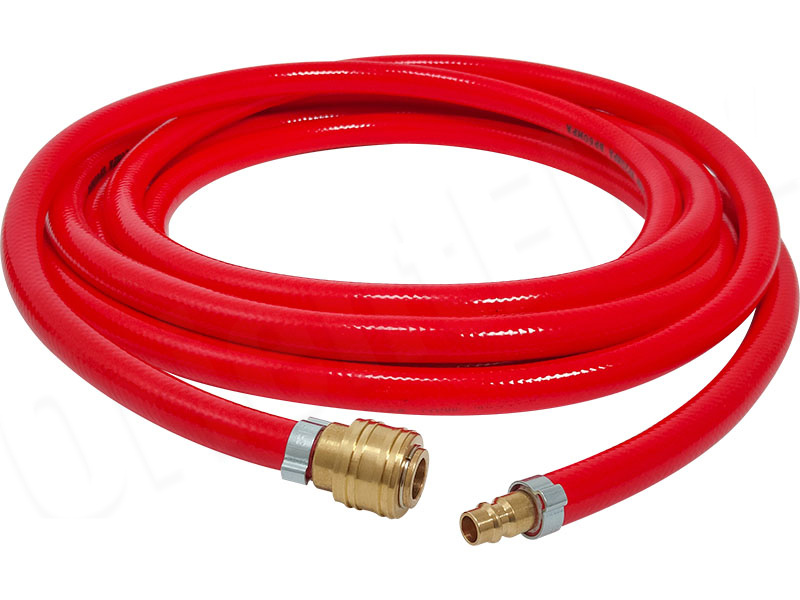
Rubber Air Hoses
Rubber air hoses are typically made from materials like nitrile rubber and PU. They come in a wide range of sizes and colors. While using rubber air hoses in mining, drilling, and construction might cause some performance reduction, industrial – grade rubber air hoses can operate in harsh conditions and have a long service life. Overall, rubber hoses are more durable compared to PVC ones.
Both PVC and rubber hoses have their roots in PU – based materials. One of the significant advantages of rubber air hoses is their flexibility, especially in cold or “foamy” weather conditions. They are also about one – third the weight of many other hoses, and among all types of hoses, rubber ones are the softest and most flexible.

These are the main differences between PVC and rubber air hoses. Ultimately, the choice depends on your specific work requirements. If you’d like to learn more about hoses, feel free to consult Orientflex. We’re ready to provide you with more useful information.