
PU ducting hoses are both flexible and highly abrasion-resistant. Thanks to these qualities, they can efficiently transfer abrasive materials such as sand, gravel, and particles. As a result, they’re an ideal choice for material handling tasks, especially in woodworking and similar industries.
One common challenge in the hose industry is how to properly tighten PU steel wire hoses. After all, during material transfer, you must prevent leakage. Additionally, a secure fastening helps avoid issues related to positive and negative pressure. Fortunately, there are several effective connection methods for PU ducting hoses, including threaded, flange, and clamp connections. These three methods are widely used, but which one suits you best? The answer depends on your specific work requirements.
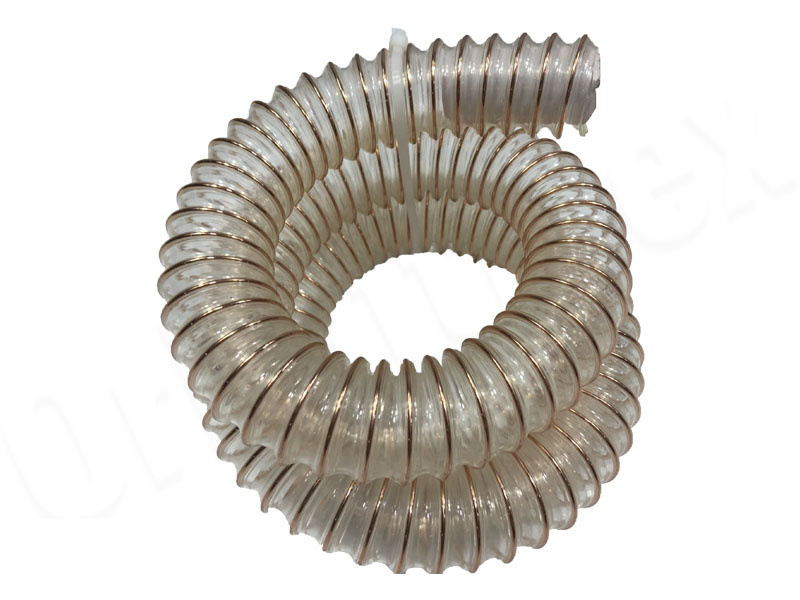
1. Clamp Connection
First of all, if you’re using a PU duct hose to transfer granular or powdery substances, the hose clamp is a great option. For starters, it’s incredibly easy to install and uninstall, saving you time during setup and maintenance. Moreover, clamps are an affordable choice, helping you keep costs down. However, it’s important to note that this method has relatively poor sealing performance. So, if you’re dealing with fluids or air, there’s a risk of leakage. Consequently, the clamp connection is most suitable for handling particles and powders.
2. Flange Connection
On the other hand, when working with large – diameter hoses to transfer powder, gas, or liquid media, the flange connection stands out as the best choice. Flange connections offer excellent sealing and can withstand significant pressure, ensuring there’s no leakage. Nevertheless, they aren’t as straightforward to install as clamps. Another factor to consider is that the PU hose and flange come as a combined unit, which means this method can be quite costly.
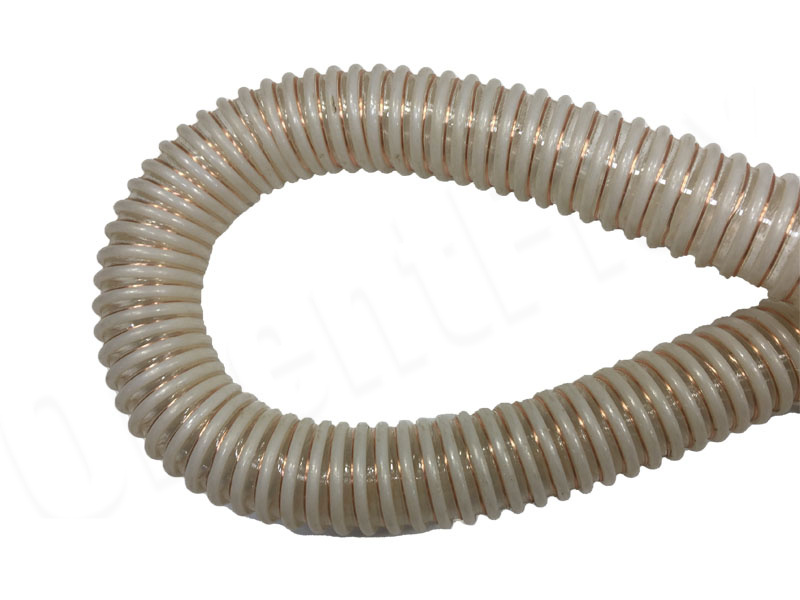
3. Threaded Connection
In some situations, your PU flexible ducting might be too short for a long – distance application. In such cases, you’ll need to connect two hoses. Here, a threaded connector becomes essential. The threaded connection method provides a reliable seal between two pipes. Additionally, it works well with powder, gas, and liquid media, making it a versatile option for various transfer tasks.