
In the past, air ducts only transported cold air. Now, some companies have invented high-temp air duct. These ducts resist high temperatures well and are popular in many fields. They work in ventilation systems. You’ll often find them in machine rooms and basements—used for air supply, exhaust, and fire smoke removal. They remove smoke and dust, all while withstanding high heat and exhaust.
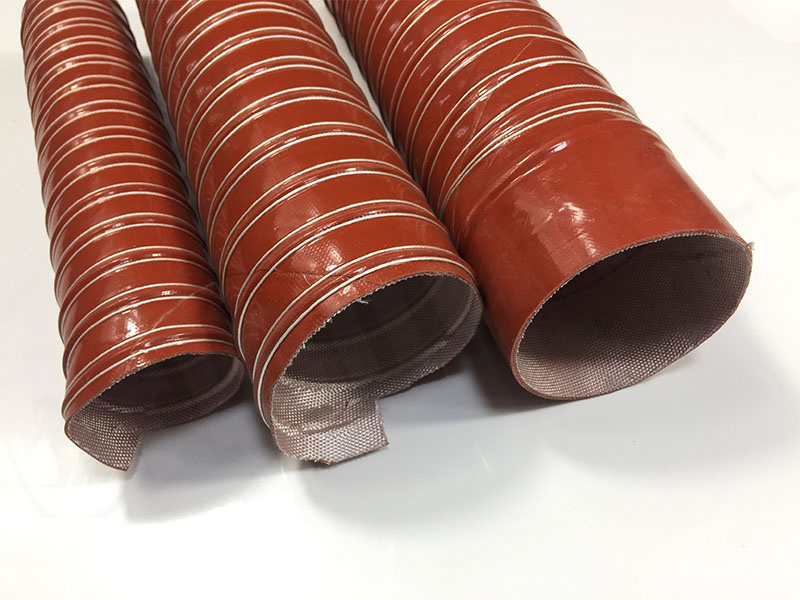
Sealing High-Temp Ducting
Typically, you can use heat-sensitive or pressure-sensitive tape for sealing. But before sealing high-temp air ducts with tape, take a step first. Use special spatula-shaped binding pins to fix the pipe joints. Space these pins 50mm apart. When binding, angle the pins slightly against the seam. Note that binding pins only fasten lap joints with flaps. For joints without flaps or flat interfaces, use tape tabs instead. The maximum tape size is 300mm, and you need at least one tab on each side.
If the system’s internal static pressure causes the wall to deflect by 1%, you must reinforce the high-temp duct hose. special pipelines, such as those with variable warps or circuitous paths.
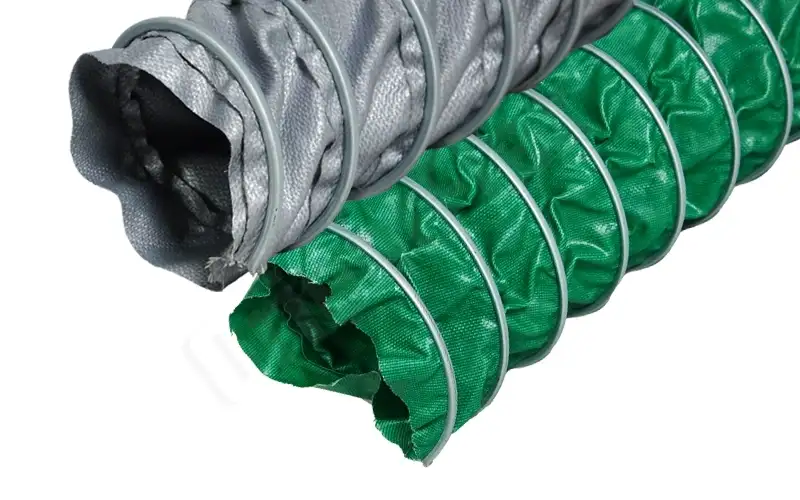
Reinforcement Methods for High-Temp Duct Hoses
Anti-sagging method: Use this for
Tie rod method: Reinforce with steel rods and casings. It works best for positive pressure below 500Pa.
Frame method: Reinforce using light steel keels.
Embrace method: Also uses light steel keels. It’s for special pipes where tie rods or frames won’t work—like 90-degree elbows, tees, and bulkhead pipes.