
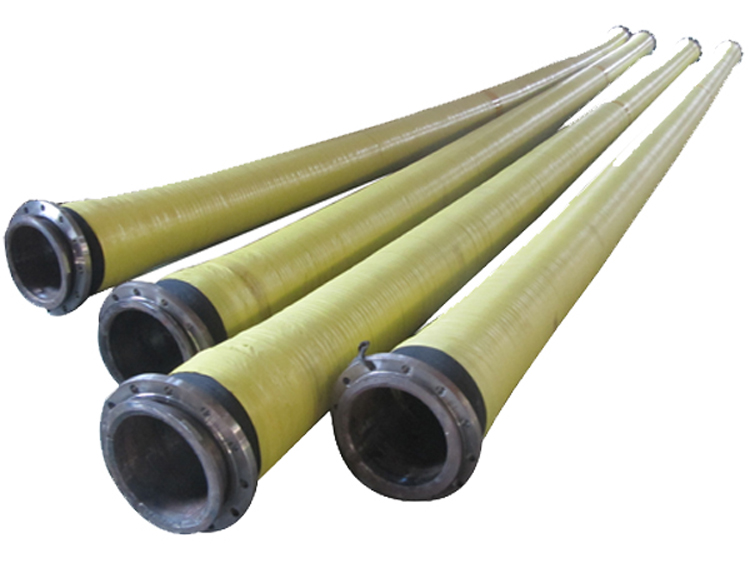
Dredge hoses aren’t common in daily life, but they’re essential tools for dredging work. Let’s take a moment to briefly introduce them.
Types of Dredging Hoses
Rubber dredging hoses come in several types. These include suction dredging hoses, floating dredge hoses, and dredge discharge hoses. In terms of connection methods, there are flared-type dredge hoses, flexible dredge hoses, and more. Among these, large-diameter suction dredging hoses are the most common.
Material & Conveying Medium
Material: Natural rubber
Conveying Medium: Used for ports, docks, seawater, silt, river sand, flood discharge, and similar applications.
Uses
Rubber dredging hoses primarily discharge mud from rivers, lakes, or other water bodies.
Precautions for Use
Bending Radius
Never bend the hose smaller than the specified minimum radius. This prevents damage from excessive stretching.
Type Selection
Choose the right type of dredge discharge hose based on your specific usage conditions.
Pressure Control
When using the hose, balance and adjust pressure gradually. Sudden pressure increases can damage the rubber.
Hose Handling
When moving the work site, lift the hose off the ground—never drag it. Dragging can scratch the rubber and corrode the skeleton layer.
Post-Use Cleaning
If handling corrosive liquids, clean the hose interior after use. This prevents residue from corroding the pipe body.