
Rubber hoses are an important part of ensuring the normal operation of equipment such as cars, cranes, and loaders. When people buy and select rubber hoses, they often only pay attention to their materials. So what factors should be paid attention to when purchasing?
First is the working pressure. When the hose is conveying materials, it has to withstand some pressure due to the flow rate of the material, the inner diameter of the hose, and other reasons. And this pressure can be divided into positive pressure and negative pressure. Therefore, rubber hoses are generally divided into low-pressure hoses and high-pressure hoses. The rated working pressure of the hose we choose must be greater than the working pressure when it is actually used. Because once the pressure exceeds the maximum working pressure of the hose, it will cause damage to the hose. This may cause the hose to rupture, break, or even a serious rupture accident.
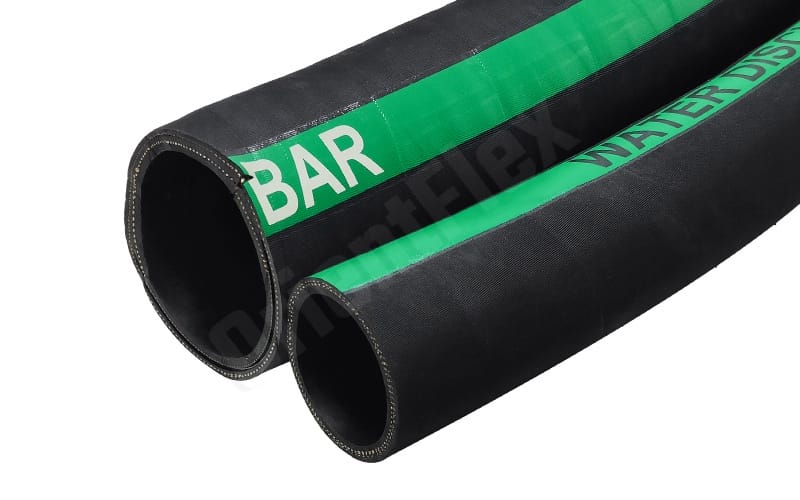
Then the shape. The conventional models of rubber hoses are generally straight tubes, while rubber hoses of other shapes are collectively referred to as special-shaped tubes. A straight tube is a rubber tube whose entire tube body has not been bent and whose inner diameter has not changed significantly. Special-shaped tubes refer to rubber tubes other than straight tubes, such as reducers with changed inner diameters, flat bends with flat bends, and some bends with three-dimensional bends. We must choose a hose of the right shape when using it. Otherwise, if the hose is bent forcibly, the hose wall may be damaged.
Final length
A hose that is too long will inevitably bend when used. Even if the rubber hose can withstand this degree of bending, the pressure on the bending part of the hose body will increase to a certain extent when conveying materials. Therefore, the hose length should be selected according to the actual situation.